02 / Product languageTwilio · 2022 to 2023
One Twilio
One product language for a growing suite.
Researching, defining, and validating a shared experience across Twilio, Segment, and SendGrid.
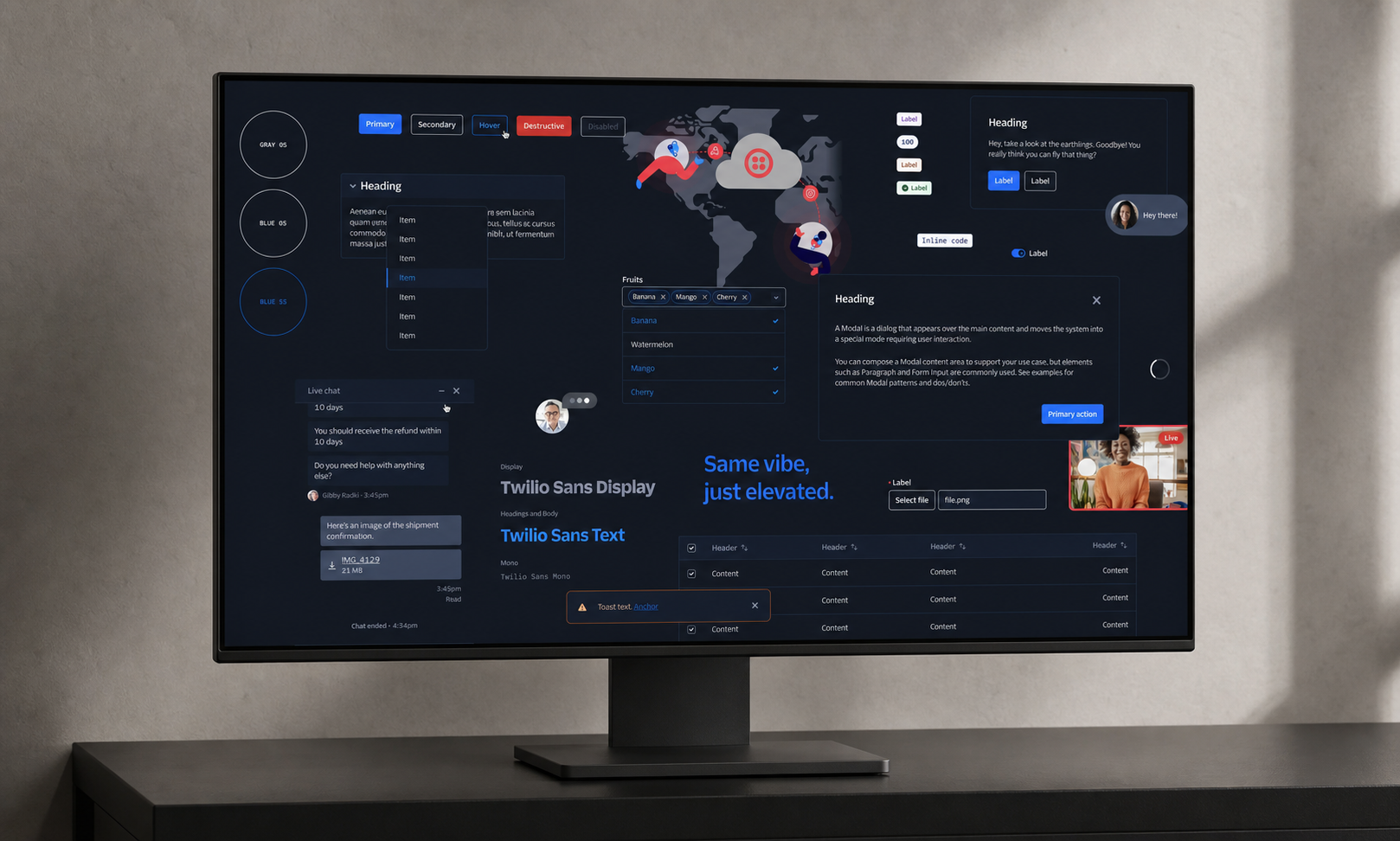
RoleSenior visual product designer
ScopeResearch, foundations, product language
PartnersPaste, product, brand, research
OutcomeOne direction across the suite
01 / The challenge
Acquisitions expanded the suite. The experience stopped feeling like one company.
Twilio, Segment, SendGrid, and Flex each carried a different product language. Customers moving between them had to relearn navigation, hierarchy, and interaction patterns.
Paste already gave Twilio teams accessible components. The next challenge was larger: define a visual and structural language that could connect every product without flattening what made each one useful.
4Products in the baseline
50Cross-product customers
1Shared direction
02 / Start with evidence
We measured the experience before we tried to redesign it.
Customers who used at least two Twilio products reviewed real screens from Segment, SendGrid, Console, and Flex. We asked about visual quality, cohesion, cross-product workflows, and the words they associated with each experience.
Implementation matters.
Console and Flex both used Paste, but customers rated them differently. A system only works when product teams apply it with care.
Familiar patterns build confidence.
Consistent navigation and hierarchy reduce the learning curve when customers move across a suite.
Friendly was missing.
The desired trait did not appear in the top five for any product, giving the new language a clear emotional target.
03 / Design together
We opened the work before we narrowed the work.
Weekly concept jams and open critiques brought product designers and stakeholders into the process. Teams explored type, color, illustration, navigation, and page structure, then voted on the directions with the most potential.
That participation created more than options. It built trust in the direction before the system asked teams to adopt it.
04 / Validate the direction
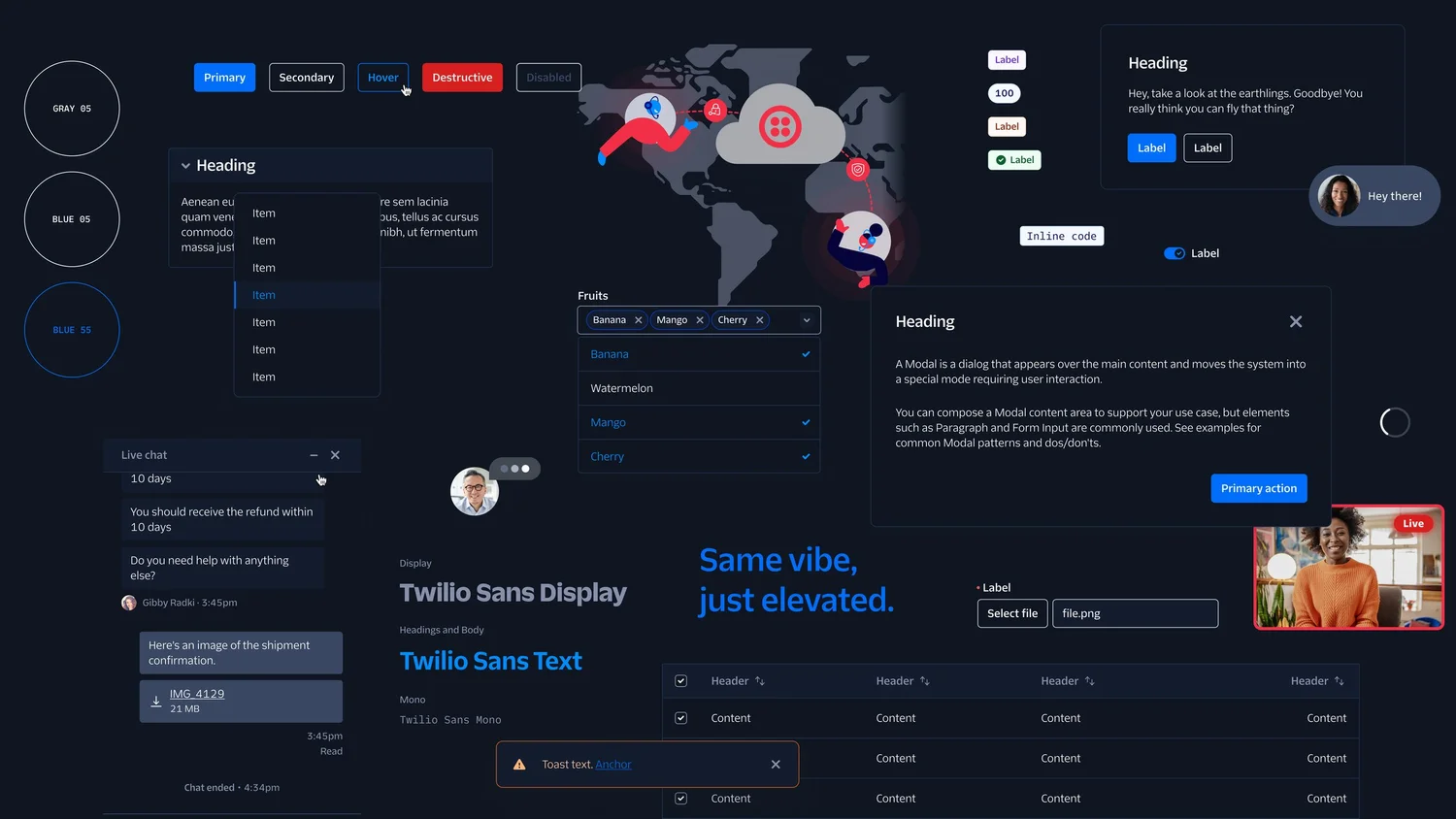
We tested the new language against the baseline.
Typography
Twilio Sans across headings and interface text
Navigation
Dark shared navigation across the product suite
Expression
More color and illustration where it adds clarity and warmth
Structure
Shared topmast and sidebar patterns for every product
05 / The outcome
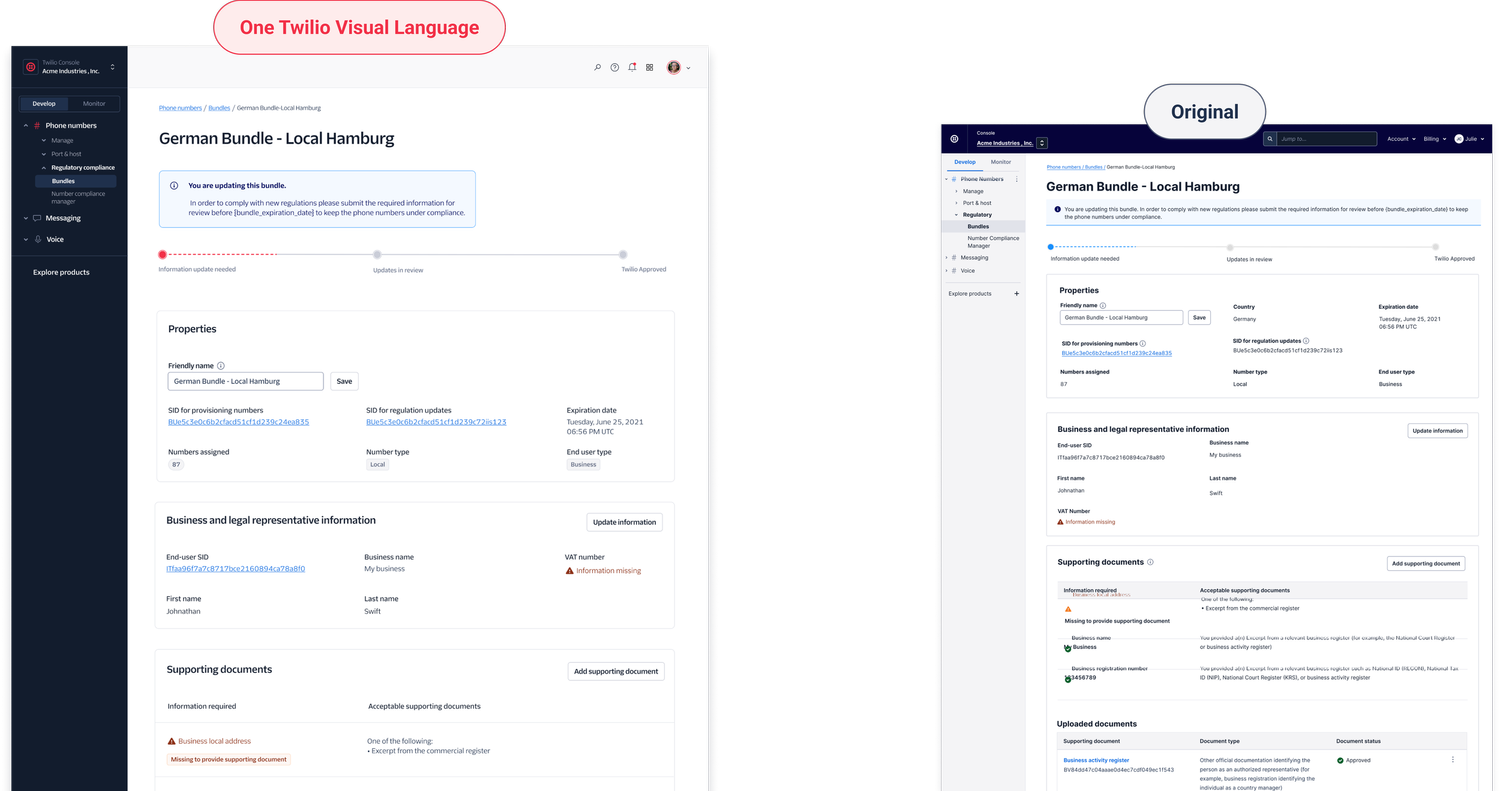
A system that could feel unified without feeling generic.
The final Paste theme translated the research into foundations and shared patterns that teams could use across Twilio, Segment, and SendGrid.
What I learned
A design language is also a change-management tool.
We used the original readout as a living skeleton for every update, shared progress in the monthly UX showcase, and opened working sessions during Think Week.
The strongest decisions came from pairing a clear research signal with an open process. People could see how the direction evolved and where their feedback changed it.
One Twilio team member“Liberty regularly demonstrates her ability to lead through nebulous territory and ask the hard questions about how brand expression should be systemized.”
Three takeaways
Measure before making.
A baseline turned a subjective redesign into a direction the team could test and defend.
Components are not enough.
A cohesive suite needs shared hierarchy, navigation, expression, and implementation quality.
Invite people into the system.
Open critiques and concept jams made adoption part of the design process.